Integrate Jira with Astra (Two-Way Sync)
Last updated: January 19, 2026
Overview
Astra's Jira integration now supports two-way synchronization between Astra vulnerabilities and Jira issues. You can create, update, and transition items in either system, and changes will automatically sync based on your configured mappings.
Key Features:
Supported Entities: Vulnerabilities, Findings, Risks, and custom issue types
Sync Direction: Astra → Jira and Jira → Astra (configurable)
Scope: Per-target and per-project mappings with granular field controls
What's New
Two-Way Sync: Real-time updates from Jira back to Astra
Field-Level Controls:
Jira project mapping per target
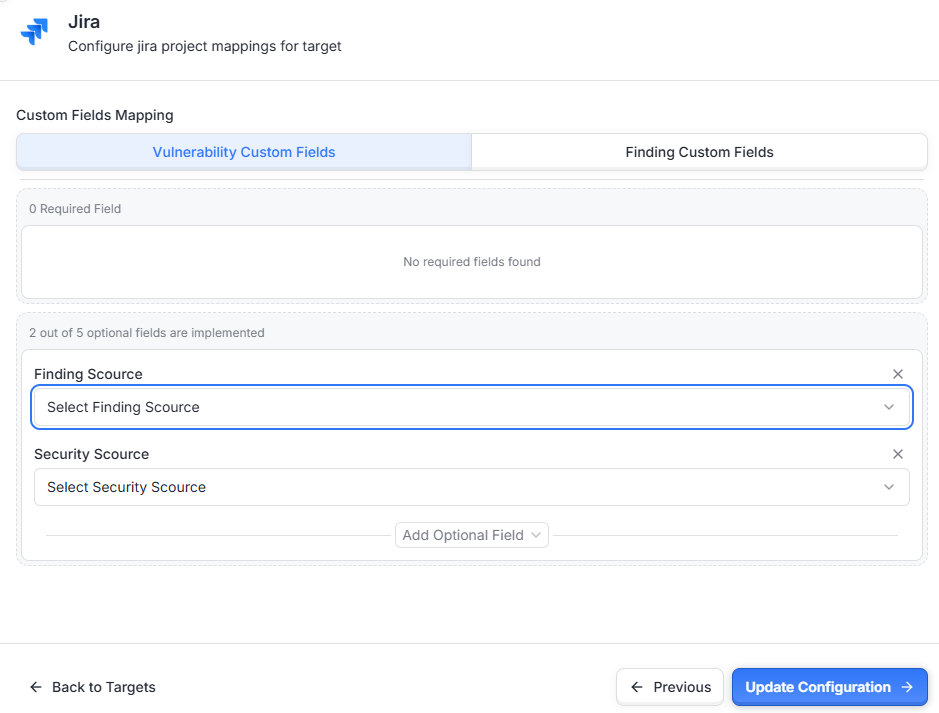
Issue type and custom fields mapping
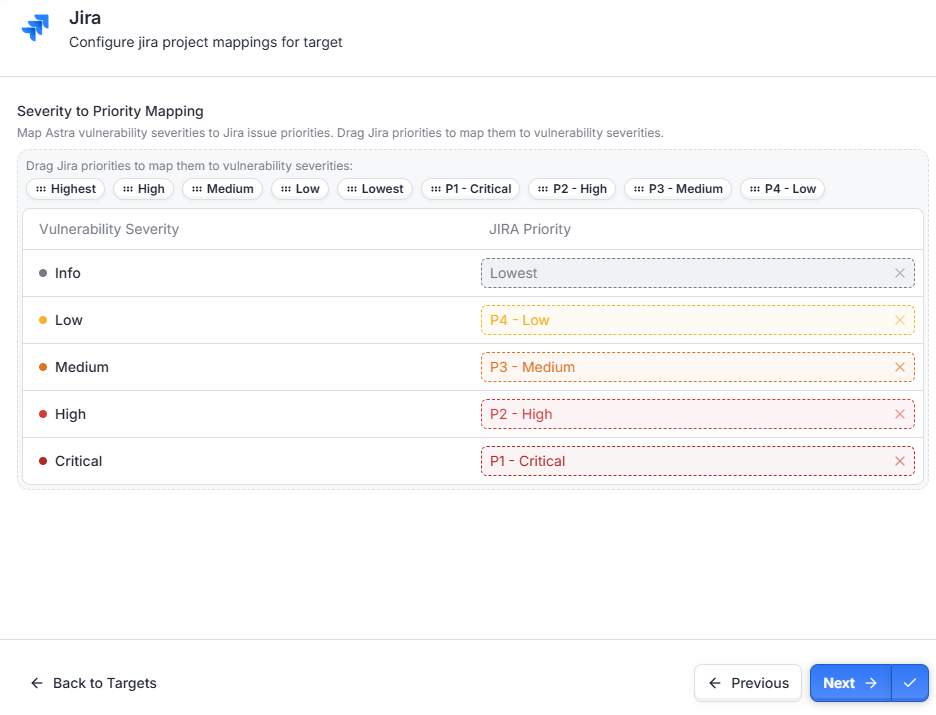
Severity → Priority mapping
Status mapping with transition rules
Setup Steps
Step 1: Open the Jira Integration
Navigate to Integrations → Jira → Connect
Follow the connection flow, then proceed to Targets
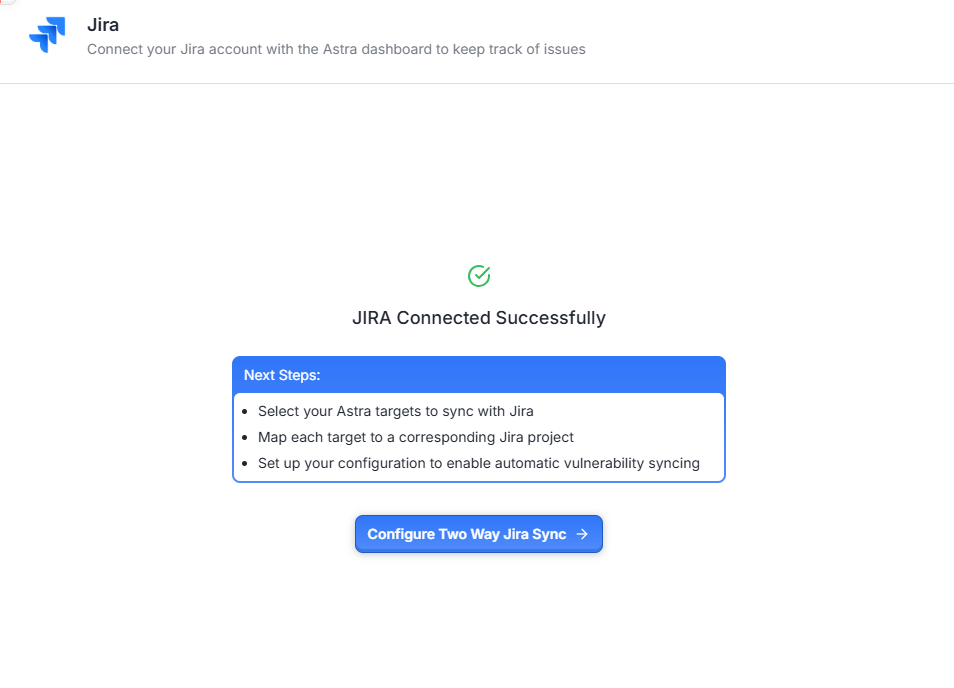
Once the integration is complete, select Configure Two-Way Jira Sync
For detailed setup guidance, refer to the Jira integration help article.
Step 2: Add or Remove Jira Targets
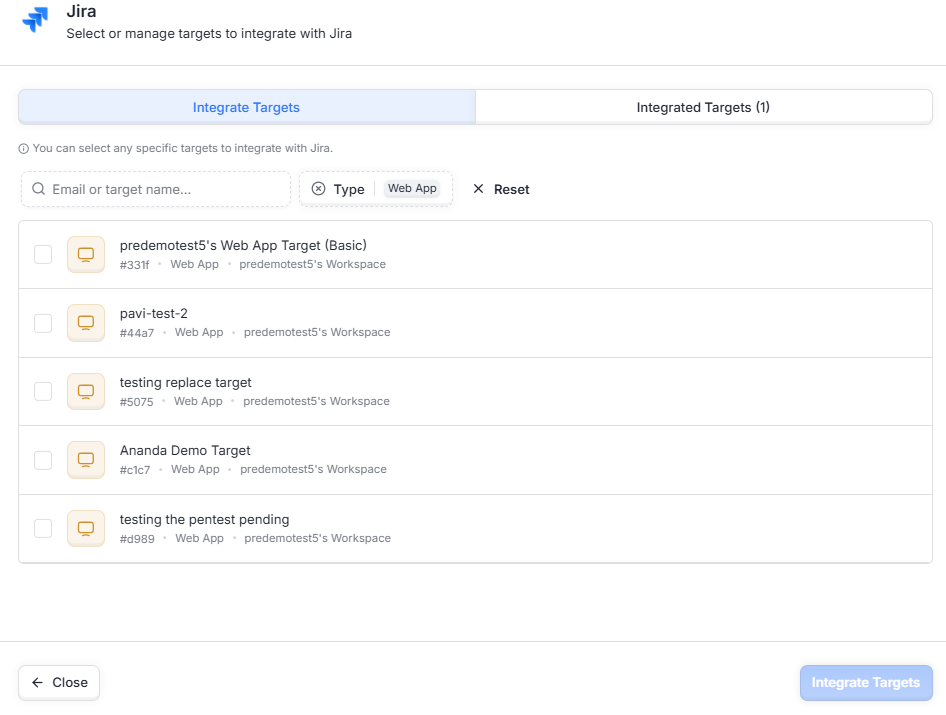
Select the target(s) you want to sync with Jira
Click Integrate Target
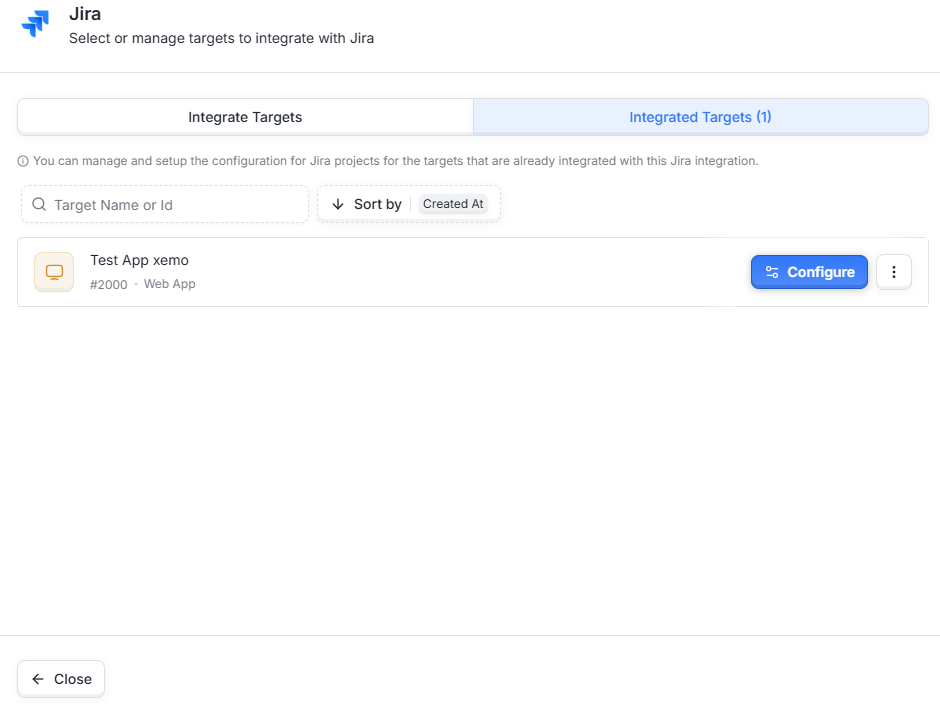
View the integrated target in the Integrated Target List
This creates a per-target Integration Project linking your Astra target to a Jira project.
Step 3: Configure Project Mapping (Per Target)
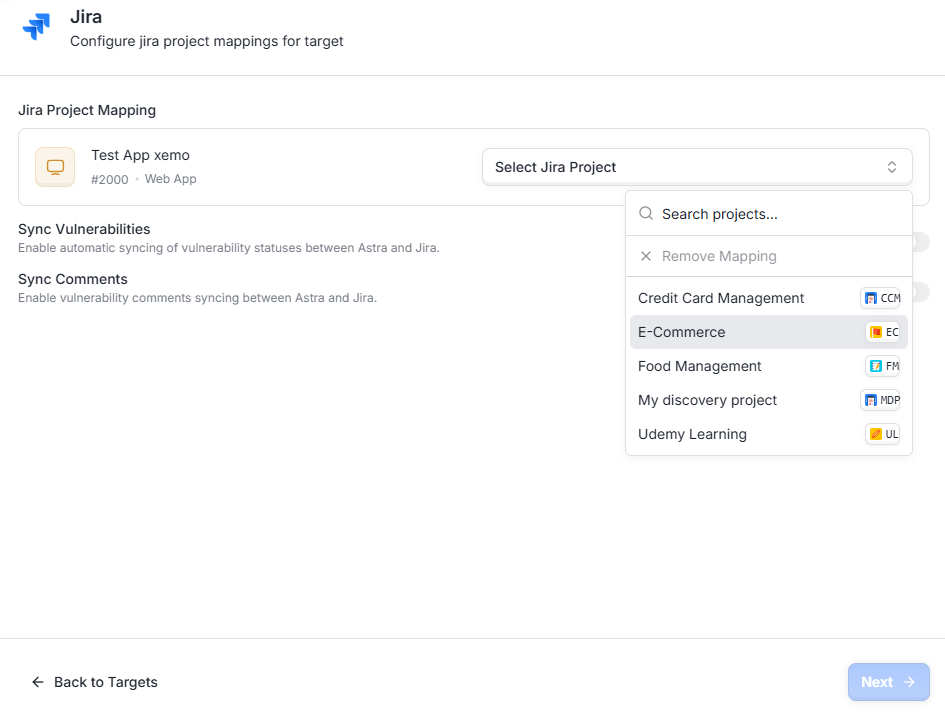
Open Configure Jira Project Mappings
Click Configure on the added target
Select the Jira project for the integrated target
Confirm that the Jira Project and Astra Target are displayed
Note: Each Jira project can be linked to only one Astra target.
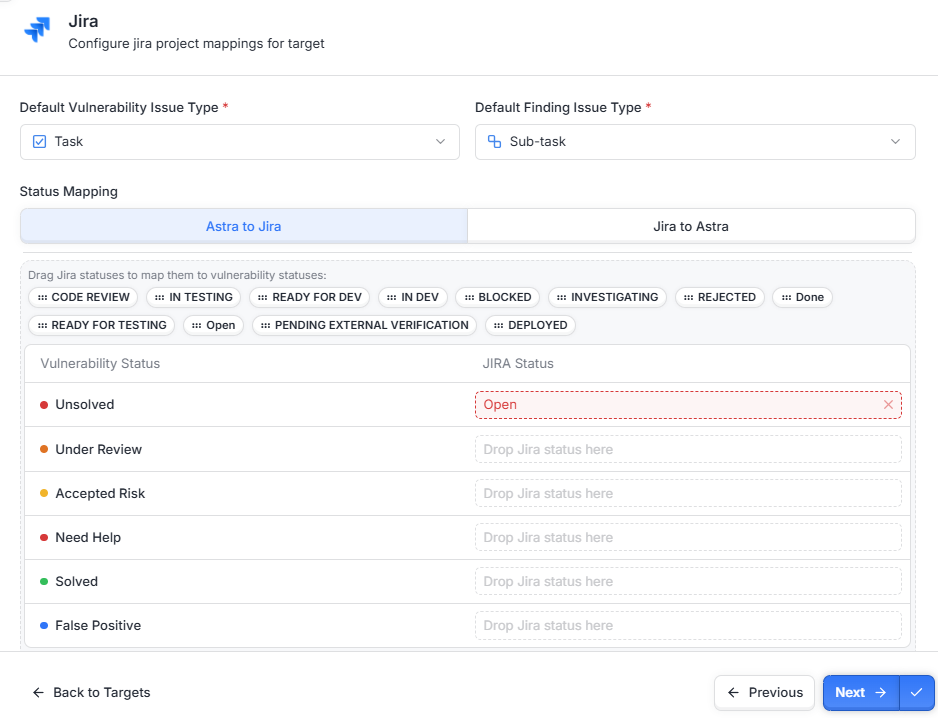
Step 4: Issue Type & Status Mapping
Issue Type Selection
Vulnerabilities: Choose Jira issue type (e.g., Bug, Task, Story)
Findings: Choose Jira issue type (e.g., Sub-task, Task)
This determines which Jira fields are available for mapping.
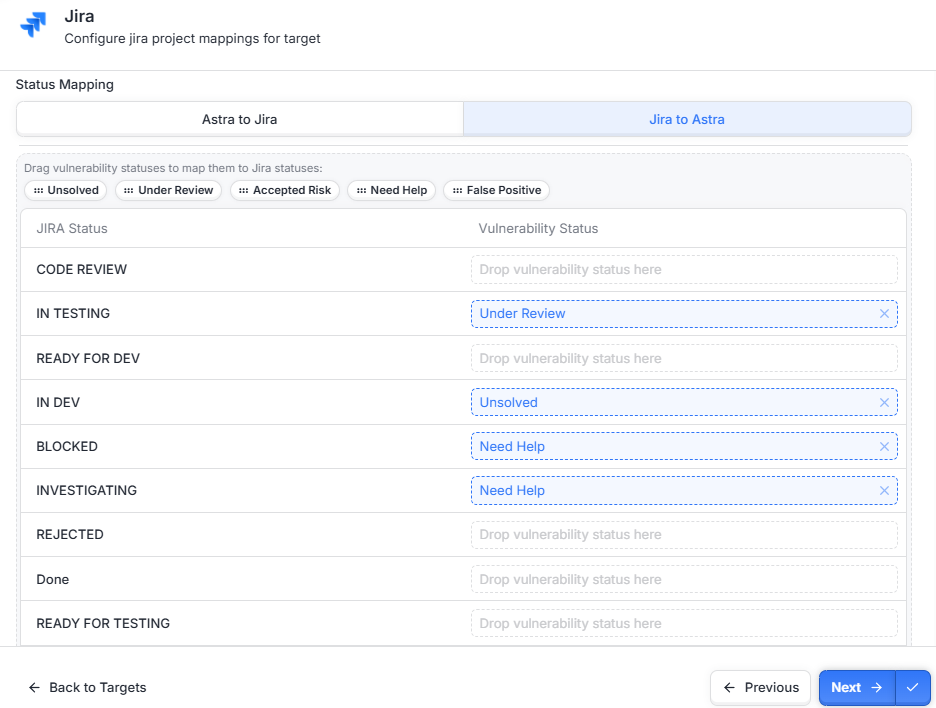
Issue Status Mapping
Astra → Jira: Map Astra vulnerability status to Jira issue status (e.g., Open → In Progress → Done)
Jira → Astra: Map Jira issue status to Astra vulnerability status
Step 5: Severity → Priority Mapping
Align Astra severity levels to Jira priority levels:
Astra Severity | Jira Priority |
Critical | Highest |
High | High |
Medium | Medium |
Low | Low |
Informational | Lowest |
Note: Ensure every Astra severity has a Jira priority fallback. For unmapped values, set a default in the Defaults section.
Step 6: Map Jira Custom Fields
Map Astra fields to Jira custom fields (single/multi-select, text, number, URL)
Supports required and optional fields during Jira issue creation
Best Practices:
Keep Summary and Description as Astra → Jira to avoid formatting loss
Use Jira custom fields for unique Astra metadata (e.g., CVSS, Asset ID)
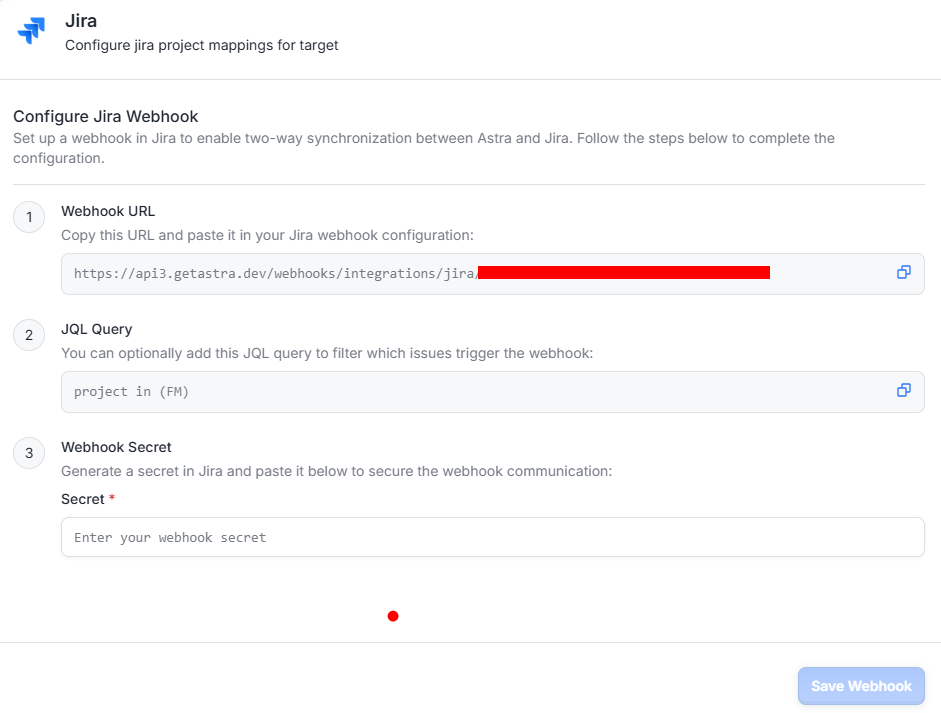
Step 7: Configure Webhooks (Jira → Astra)
Enable real-time two-way sync:
Generate the Webhook URL in Astra
In Jira:
Go to System → Webhooks → Create Webhook
Name:
Astra OrbitX WebhookURL: Paste Astra’s webhook URL
Events: Issue created, updated, transitioned, commented, deleted (as needed)
Scope: Limit to the mapped project(s)
Save the webhook and copy the webhook secret into Astra configuration
Security: Astra validates the payload and signature (if configured). Limiting the scope reduces noise.
Sync Rules and Behavior
Field Direction:
Astra → Jira only: Jira edits won’t overwrite
Jira → Astra only: Astra won’t overwrite Jira
Bi-directional: Newest change wins, unless locked in config
Comment Sync:
Astra → Jira: Key events and updates as comments
Jira → Astra: Comments on mapped issues sync back with author and timestamp
Attachments:
Astra adds key evidence on creation
Back-sync depends on Jira APIs and size limits
Unmapped Fields: Ignored on sync
De-duplication: Astra links once per finding per target; repeated creates are prevented
Need Help?
If you’re unsure about any step in the integration or encounter issues, raise a support ticket from your Astra dashboard. Our team will guide you through the setup and troubleshooting process.